
Written by Mohsin Khan, Founder of FootFixHub | Last Updated: August 12, 2026 | Reading time: 9 minutes
If you’ve been searching for ems foot massager health benefits clinical evidence instead of vague marketing claims, you’re in the right place. An EMS foot massager works very differently from a standard shiatsu or roller-style device: rather than pressing and rolling against the skin, it delivers low-level electrical impulses that make the foot and calf muscles contract on their own.
But do the health benefits hold up, and what does the clinical evidence actually say? In this guide, we break down the real ems foot massager health benefits clinical evidence currently available, the side effects you should know about, and how to use one safely. We’ve pulled information from peer-reviewed research and medical publications, not just product pages, so you get an honest, evidence-based picture — the same standard we hold every FootFixHub buying guide to.
Quick answer: Yes — clinical research supports EMS foot massagers for improving blood circulation, reducing leg heaviness, and easing short-term muscle discomfort. Benefits are strongest during and shortly after use, and the device is safe for most healthy adults when used on the correct intensity setting.
Table of Contents
What Is an EMS Foot Massager?
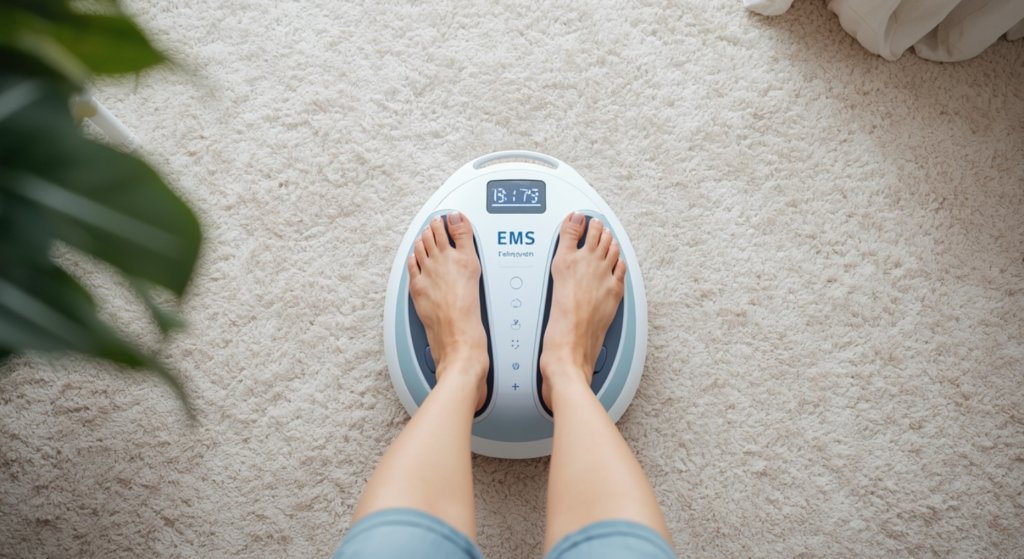
EMS stands for Electrical Muscle Stimulation. It is a device — usually a footplate, mat, or wearable pad — that sends low-level electrical impulses through the soles of your feet. Those impulses trigger the calf and foot muscles to contract and relax automatically, without you having to move at all.
This is different from a standard vibration or shiatsu foot massager, which works purely through physical pressure. This device instead works through electrical muscle stimulation, the same underlying principle used in physical therapy clinics for decades to support patients recovering from surgery, injury, or reduced mobility.
You may also see this technology referred to as:
- Electric muscle stimulator
- Muscle stimulator
- Stimulation machine
- Electric stim machine
- EMS therapy device
All of these terms generally describe the same core technology, just applied to different parts of the body. When it’s specifically designed for the feet and lower legs, it’s marketed under this name.
How Does an EMS Foot Massager Work?
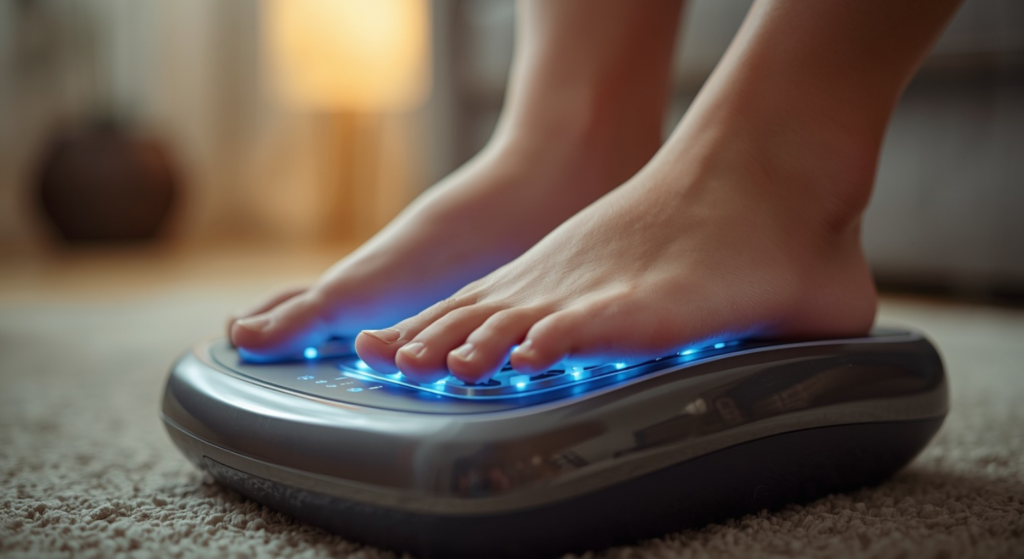
When you stand on the footplate, mild electrical currents pass through your feet. These currents stimulate the nerves that control your calf and foot muscles, causing them to contract rhythmically — much like the muscle action that happens naturally when you walk.
This rhythmic muscle action matters because it switches on the calf-muscle venous pump — the natural mechanism your body uses to push blood back toward the heart. A peer-reviewed paper hosted on PMC, part of the National Institutes of Health, reports that stimulating the feet this way triggers the same pump, boosts blood movement through both arteries and veins, and helps ease fluid retention lower in the leg.
In simple terms: the device tricks your leg muscles into acting like you’re walking, even while you’re sitting still.
EMS Foot Massager Benefits According to Clinical Evidence
This is where most articles either overhype the technology or dismiss it completely. Here’s what the actual research shows about ems foot massager health benefits clinical evidence — no guessing, no vague marketing language.
1. Improved Blood Circulation
This is the most well-documented benefit of an EMS foot massager. A clinical trial protocol involving neuromuscular electrical stimulation for diabetic neuropathy found that foot stimulation increased peripheral blood flow at the foot substantially more than voluntary exercise alone, with similarly strong gains in tissue oxygenation. Separate hemodynamic studies have also recorded significant increases in both venous and arterial blood flow during device use compared to resting.
2. Reduced Leg Heaviness, Aching, and Cramping
A randomized, sham-controlled trial on older adults tested an 8-week EMS foot stimulation program and found measurable improvements in leg pain, heaviness, tiredness, and cramping symptoms, alongside gains in physical function. This supports the idea that consistent use of this device may meaningfully improve day-to-day leg comfort, particularly for people who are less mobile.
3. Support for Circulation-Related Conditions
Research covered by The Conversation, a publication that summarizes peer-reviewed science for the public, confirmed that electronic muscle stimulators genuinely increase arterial blood flow in the calf, both in healthy individuals and in people with peripheral artery disease. A 2023 clinical trial involving 200 patients with peripheral artery disease used electrical muscle stimulation for 30 minutes daily over three months as part of a broader treatment plan.
It’s worth noting, however, that these circulation improvements were shown to last only while the device was actively being used — not permanently afterward. This is an important, honest distinction that separates real clinical evidence from exaggerated marketing claims.
4. Passive Muscle Activation
Because it contracts your muscles for you, an EMS foot massager offers a form of passive activation for people who sit for long periods, have limited mobility, or are recovering from an injury. This doesn’t replace exercise, but it can support circulation during long flights, desk work, or periods of reduced movement.
Do EMS Foot Massagers Work? What the Research Actually Shows
The honest answer is: yes, for circulation and short-term symptom relief, but with limits. This is the core of the ems foot massager health benefits clinical evidence debate — real gains exist, but they’re specific, not miraculous.
Clinical-grade EMS devices, the kind used in hospitals and physical therapy settings, have strong research backing for improving blood flow and reducing symptoms like leg heaviness and swelling. Consumer EMS foot massagers use the same underlying technology, but typically at lower intensity levels designed for home use.
The weaker part of the picture is anything lasting. Nearly all of the available research tracks what happens right around a session — not what’s still true weeks or months down the line. That means this technology holds up well as short-term circulation and symptom support, but it’s smarter to treat it as an ongoing habit rather than a single fix or a stand-in for treating a medical condition.
EMS Foot Massager Side Effects
No therapy is entirely without risk, and this one is no exception. Reported side effects are generally mild, but you should know them before starting.
Common, mild side effects include:
- A tingling or buzzing sensation during use (normal and expected)
- Mild skin redness at the point of contact
- Temporary muscle fatigue after longer sessions
- Mild discomfort when the intensity dial is turned up too far, too fast
Less common but more serious concerns include:
- Skin irritation with prolonged or frequent use
- Muscle overstimulation if sessions run too long or too intense
- Interference with certain electrical medical implants
Starting on the lowest intensity setting and gradually increasing it is the safest way to avoid discomfort or irritation, especially in your first few sessions.
Is an EMS Foot Massager Safe? Who Should Avoid It
For most healthy adults, this device is considered safe when used correctly. However, certain groups should avoid using one, or only use it under medical supervision:
- People with a pacemaker or any implanted electrical device
- Anyone diagnosed with deep vein thrombosis or another clotting-related condition
- Anyone currently dealing with a skin infection or an open wound on the foot
- Pregnant individuals
- People with diabetes (should start on the lowest setting and monitor skin closely)
- Anyone with epilepsy or a history of seizures
If you fall into any of these categories, speak with a healthcare provider before using one, even if it seems mild. For a lower-intensity alternative, our foot massager for neuropathy and numbness guide covers gentler options.
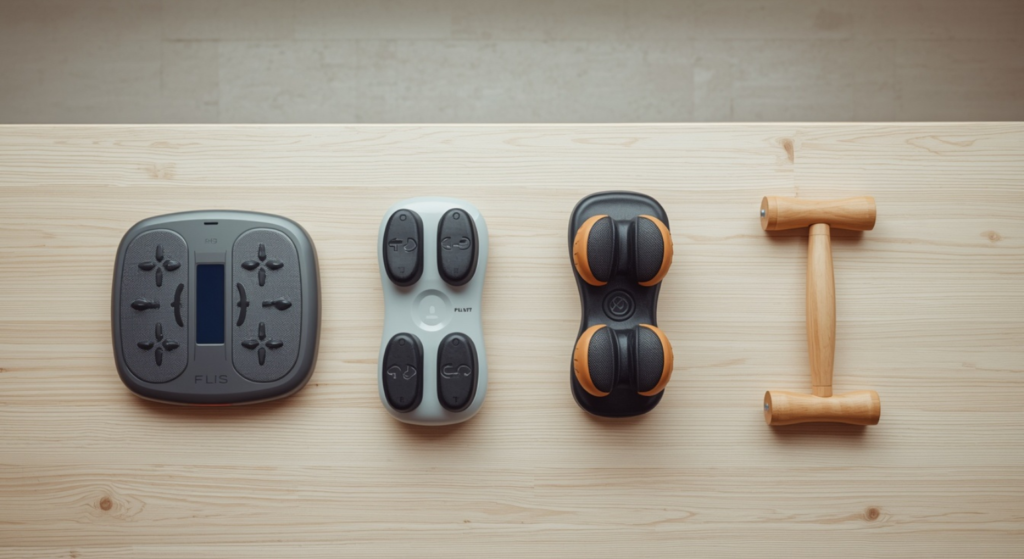
EMS Foot Massager vs. Other Types of Foot Massagers
| Feature | EMS Foot Massager | Shiatsu Foot Massager | Air-Compression Massager | Manual Roller |
|---|---|---|---|---|
| Mechanism | Electrical muscle stimulation | Physical kneading nodes | Inflating air chambers | Manual pressure |
| Best for | Circulation, leg heaviness | Muscle tension, knots | Swelling, recovery | Daily light use |
| Clinical research support | Strong (circulation-specific) | Moderate | Moderate | Limited |
| Portability | High (mat/pad style) | Low | Low | Very high |
| Sensation | Tingling/buzzing | Deep pressure | Squeeze and release | User-controlled |
If your main concern is circulation, heaviness, or numbness, an EMS foot massager is generally the more evidence-backed choice. If your issue is muscle tightness or knots, a shiatsu massager may feel more immediately satisfying — see our full shiatsu vs. air-compression foot massager breakdown for a deeper comparison.
How to Use an EMS Foot Massager Safely
Getting real benefit from it comes down to consistent, correct use rather than one long session.
- Start barefoot or with slightly damp feet — this helps the electrical signal transmit properly through the footplate.
- Begin on the lowest intensity setting. Increase gradually until you feel gentle muscle contractions, not pain.
- Sit comfortably with your feet flat on the plate for the full session.
- Keep sessions to 20–30 minutes. Longer isn’t automatically better and may cause muscle fatigue.
- Use it consistently, ideally daily, since circulation benefits are strongest during and shortly after each session.
- End the session right away if you notice sharp pain, numbness, or any sensation that feels off.
Following the manufacturer’s specific directions is still important, since intensity levels and modes vary between models.
What to Look For Before Buying an EMS Foot Massager
| What to Check | Why It Matters |
|---|---|
| Adjustable intensity levels | Lets you start low and build up safely |
| Multiple stimulation modes | Useful for targeting circulation vs. relaxation differently |
| Auto shut-off timer | Prevents accidental overuse |
| Clear safety warnings included | A sign the brand takes contraindications seriously |
| Skin-contact material quality | Reduces risk of irritation with regular use |
Steer clear of any device whose marketing leans on broad, unproven promises — phrasing along the lines of curing neuropathy outright or ending pain for good is a red flag. The genuine, research-backed upside is narrower than that: mainly circulation support and relief that lasts through and just after use.
EMS Foot Massager Reviews: What Users Commonly Report
Across the reviews and clinical write-ups we examined, a consistent pattern emerges. Most users report:
- A noticeable tingling or pulsing sensation, which is expected and not harmful
- A feeling of lightness in the legs and feet after regular use
- Better comfort during long periods of sitting or standing
- Mixed opinions on how quickly results are noticeable — some feel it within days, others need a few weeks of consistent use
As with most wellness devices, individual results vary based on the underlying cause of foot or leg discomfort.
EMS Foot Massager FAQs
What is an EMS foot massager?
An EMS foot massager is a device that uses electrical muscle stimulation to make your foot and calf muscles contract automatically, improving circulation and easing leg discomfort without physical exercise.
Are electric foot massagers good for you?
For most healthy adults, yes. Electric foot massagers, including EMS models, are generally safe and can support circulation, reduce leg heaviness, and ease muscle tension when used as directed.
Do EMS foot massagers work?
Clinical research supports EMS foot massagers for improving blood circulation and reducing symptoms like leg heaviness and cramping, particularly during and shortly after use. They are less proven as a long-term standalone cure for chronic conditions.
Is an EMS foot massager safe?
Yes, for most people, when used correctly and on appropriate intensity settings. People with pacemakers, blood clotting disorders, or who are pregnant should avoid it unless cleared by a doctor.
What are the side effects of an EMS foot massager?
The most common side effects are mild tingling, temporary skin redness, and muscle fatigue after longer sessions. Serious side effects are rare when the device is used as directed.
How do you use an EMS foot massager?
Stand or sit with bare feet flat on the footplate, start on the lowest intensity, and gradually increase it. Sessions of 20–30 minutes, used consistently, tend to give the best circulation benefits.
What’s the difference between an EMS foot massager and a regular electric foot massager?
A regular electric foot massager uses physical motion, like kneading or vibration. An EMS foot massager uses electrical muscle stimulation to make your muscles contract on their own, which is why it’s more closely linked to circulation research.
Final Verdict: What the EMS Foot Massager Health Benefits Clinical Evidence Really Tells Us
Based on the available clinical evidence, this device is one of the more research-backed options in the foot massager category, particularly for people dealing with poor circulation, leg heaviness, or long periods of sitting or standing. When you weigh the full ems foot massager health benefits clinical evidence together, the benefits are real, but they’re also specific: better blood flow, reduced heaviness, and short-term symptom relief, rather than a permanent cure.
Used consistently, with the right intensity settings and realistic expectations, it can be a genuinely useful addition to a daily wellness routine — especially for anyone who wants circulation support without added physical strain.
Want to see how specific EMS models stack up? Check our latest foot massager reviews for hands-on picks, or read more about FootFixHub’s testing process to see how we choose what to recommend.
This article is for general informational purposes only and is not medical advice. If you have a heart condition, are pregnant, use an implanted medical device, or have a chronic circulatory condition, consult a healthcare professional before using an EMS foot massager.
Sources referenced: PMC/NIH — 8-week foot NMES study · The Conversation — EMS and leg blood flow evidence · Imperial College London — NMES diabetic neuropathy trial protocol