By Mohsin Khan, Founder of FootFixHub | Last Updated: November 7, 2026 | Reading time: 10 minutes
Your feet carry you through every single day, so it makes sense that a good foot rub feels amazing. But you may have heard that reflexology foot massage goes further than simple relaxation. Fans say that pressing certain spots on the feet can affect the rest of the body. Critics say it is just a pleasant foot massage with a special name.
So what is the truth? This guide explains what reflexology foot massage is, what the research actually says, and how to try it safely at home. You will also find a simple foot reflexology chart, a comparison of Thai and Chinese styles, tips for choosing a spa, and clear answers to common questions.
Key Takeaways
- Foot reflexology is a massage technique that applies pressure to specific points on the feet, traditionally believed to correspond to different areas of the body.
- Some research indicates that this practice may promote relaxation and ease feelings of anxiety. However, current evidence does not show that it offers more benefits than a standard foot massage.
- Although reflexology may support general well-being, it cannot treat or cure medical conditions and should never be used as a substitute for professional healthcare.
- You can try a gentle version at home in about 10 minutes per foot.
- If you are pregnant, or you have diabetes, nerve damage, or a history of blood clots, talk to your doctor first.
What Is Reflexology Foot Massage?
Reflexology foot massage is a hands-on technique in which a person presses on specific areas of the feet with the thumbs, fingers, or a small tool. You may also see it called foot reflexology, feet reflexology, or foot massage reflexology. All of these names describe the same idea.
If you have ever asked yourself, “What is reflexology massage?” here is a simple answer. It is a pressure technique based on the belief that certain “reflex points” on the feet, hands, or ears match organs and body systems.
In foot reflexology, the bottom of the foot is separated into different sections, each traditionally associated with a particular part of the body. According to reflexology principles, these areas are believed to be connected through invisible energy pathways. For instance, the big toe is commonly linked to the head, while the middle section of the foot’s arch is associated with the digestive system.
It is important to be clear about one thing: this map is a belief system, not a proven fact of anatomy. Many people still enjoy it, and the slow, focused touch can feel deeply relaxing. Just keep in mind that a tender spot does not mean there is a problem in a matching organ.
Foot reflexology is the most widely practiced type of this therapy. Similar pressure-based techniques are also used in hand and ear reflexology, following the same basic principles.
Reflexology vs Foot Massage: What Is the Difference?
Not every foot massage is reflexology. Here is how they compare.
- Regular foot massage: A foot massage that is not based on reflexology may use techniques from Swedish massage, shiatsu, Thai massage, and other traditions. The goal is to relax muscles and ease tension across the whole foot.
- Reflexology: This approach targets specific points and zones in a set pattern, usually with the thumbs. The goal is to affect the body through those points.
Here is the part many websites skip. Cleveland Clinic points out that there is no evidence that reflexology gives more benefits than a traditional foot massage and that a foot massage in general may improve mood, stress, energy level, and sleep. A review that pooled many trials reached a similar result. It found no specific effect of reflexology over non-reflexology foot massage, except for a positive effect on anxiety.
That does not make reflexology useless. The calm setting, the gentle touch, and the time you take to rest can all help you relax. It simply means you do not need to believe in energy lines to enjoy the benefits of a good foot massage.
Reflexology Foot Massage Benefits: What Does the Research Say?
Let us separate the claims that have some support from the ones that do not.
Benefits With Some Support
- Less anxiety and better relaxation. Researchers conducted a meta-analysis of randomised controlled studies to examine the effects of foot reflexology on depression, anxiety, and sleep quality among adults. It concluded that foot reflexology may be an extra, non-drug option for people dealing with these problems. Compared with no treatment, it can help. Compared with a regular foot massage, the added effect is small.
- Mood, stress, and sleep. According to Cleveland Clinic, foot massage in general may support mood, stress levels, and sleep.
- Comfort during pregnancy and labour. Some studies show promising results, which we cover in a later section.
For most people, the benefit they notice first is simple relaxation after a long day on their feet.
Claims Without Strong Proof
- Curing diseases or “detoxing” the body. There is no reliable evidence for this.
- Treating serious conditions. Systematic reviews of reflexology for cancer symptoms have rated the evidence as low quality, so no firm recommendation can be made.
- Working better than a normal foot massage. As explained above, this has not been shown.
If a website or therapist promises to cure an illness with massage reflexology, walk away. Honest practitioners talk about relaxation and comfort, not miracle cures.
Foot Reflexology Chart: Common Pressure Points
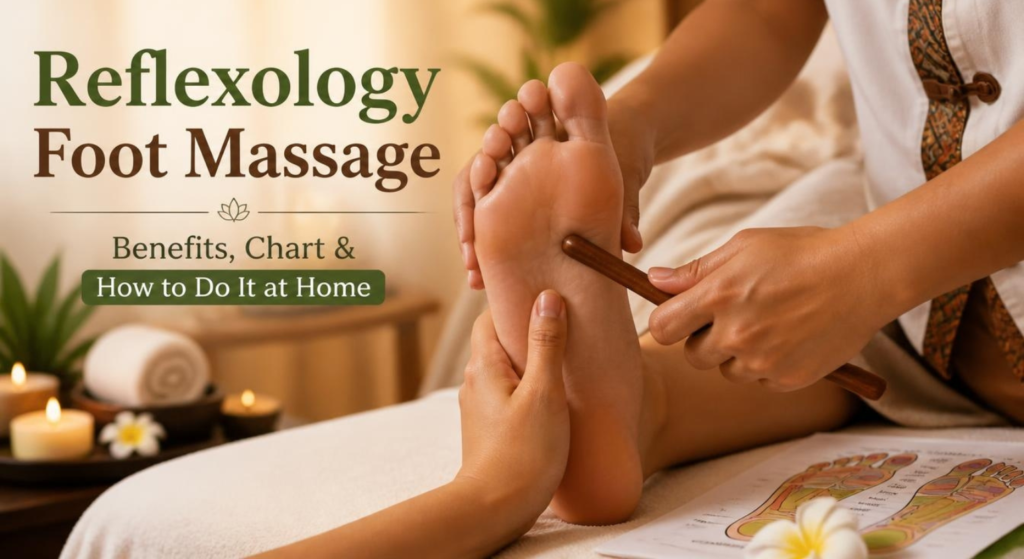
A foot reflexology chart is a simple map that shows which area of the foot is said to match which part of the body. Charts differ slightly from one source to another, but most share the same basic layout.
- Toes: head, brain, and sinuses
- Ball of the foot: Traditionally associated with the chest, lungs, and shoulder region.
- Arch: stomach, digestive area, and spine
- Heel: lower back, hips, and sciatic area
- Inner edge of the foot: spine
Treat this chart as a guide for a relaxing massage, not as a diagnosis tool. If an area feels tender, it does not mean the matching organ has a problem. It may simply mean the muscles in your foot are tight.
How to Do Reflexology Foot Massage at Home
You do not need special training to try a gentle version at home. Set aside about 10 minutes per foot. You will need a comfortable chair, a towel, and a little lotion or massage oil.
- Prepare. Wash and dry your feet. Sit comfortably and rest one foot on the opposite knee.
- Warm up. Spread a little lotion on the foot. Use both hands to stroke from the toes toward the heel for about one minute.
- Loosen the ankle. Hold the heel with one hand and gently circle the foot five times in each direction.
- Thumb-walk the sole. Press with the pad of your thumb and move forward in small steps, like a caterpillar. Start at the heel and work toward the toes.
- Visit each zone. Using the chart above, spend 20 to 30 seconds on the heel, arch, ball, and toes. Use firm but comfortable pressure.
- Pull and squeeze the toes. Gently squeeze each toe from base to tip.
- Finish and repeat. End with long, slow strokes over the whole foot. Then repeat on the other side.
A few tips make the experience better:
- Pressure should feel firm, never sharp or painful.
- If you are new to reflexology on feet, start with light pressure and build up over time.
- Stop right away if you feel numbness, tingling, or sharp pain.
- A few short sessions a week is a reasonable start. There is no proven ideal schedule.
Tools: Reflexology Foot Massage Mat, Stick, and Machine
If your thumbs get tired, tools can help.
- Acupressure mat. A mat with raised nubs lets you stand or sit with your feet on the surface for a few minutes. Start with socks on if it feels too sharp.
- Reflexology stick or roller. A wooden stick or roller lets you press along the arch with less effort. It is a good option for people who want deeper pressure without tiring their hands.
- Electric machine. A shiatsu foot massager mainly kneads and compresses the whole foot. Strictly speaking, it is not true reflexology because it does not follow a point-by-point pattern, although some models include acupressure-style nodes. Many people still find these machines very relaxing, especially after a long day of standing.
No tool has been proven better than another. Choose the one that feels comfortable and that you will actually use.
Reflexology Foot Massage for Plantar Fasciitis: Does It Help?
Plantar fasciitis causes sharp heel pain, often during the first steps of the morning. Many people look for natural relief, so it is a fair question.
Strong research showing that reflexology treats plantar fasciitis is lacking. Some people find that gentle rolling along the arch feels comfortable. However, pressing hard on a painful heel can make things worse. If heel pain lasts more than a couple of weeks or keeps coming back, see a doctor or podiatrist. They can suggest proven options such as stretching, supportive footwear, or physical therapy.
If you want a roller or machine designed with heel pain in mind, read our guide to the best foot massager for plantar fasciitis.
Reflexology Foot Massage During Pregnancy and Labor
Pregnancy is one of the most studied areas for foot reflexology. A 2024 meta-analysis in Scientific Reports combined 13 randomised controlled studies with 1,189 participants. It found that foot reflexology massage reduced anxiety and pain in pregnant women, although results varied from study to study. A separate systematic review of six studies with 643 women concluded that reflexology can lower anxiety during labour, and none of those studies reported specific side effects.
These results are encouraging, but they do not mean every pregnant person should try it alone. Please keep these points in mind:
- Talk to your doctor or midwife first.
- Choose a trained practitioner who has experience with pregnant clients.
- Many therapists avoid strong pressure around the ankles during pregnancy, especially in the first trimester.
Thai vs Chinese Reflexology Foot Massage: Which Style Is Better?
If you visit a spa, you will quickly notice that styles differ. Here is a simple overview.
- Thai reflexology foot massage: This style often uses a wooden stick and the thumbs to press along lines on the foot. Sessions can include stretching and may extend to the lower legs.
- Chinese reflexology foot massage: This style is usually tied to traditional Chinese medicine ideas. Therapists often use firm pressure on specific points, and sessions tend to be slow and deeply relaxing.
- Western reflexology: This style follows foot charts like the one above and is often lighter in pressure.
What about reflexology vs Thai foot massage? The main difference is the focus. Reflexology targets points that are said to match body parts, while Thai foot massage comes from a broader tradition that uses pressure lines and stretching. Some therapists also offer reflexology hand and foot massage, which applies the same theory to the hands.
No style has been proven better than the others. Choose the one that feels most comfortable, with a therapist you trust.
How to Find a Good Reflexology Foot Massage Near You
Searching for a reflexology foot massage near me will bring up many options. These tips help you choose well:
- Check training. Ask whether the therapist has completed a reflexology course or holds a certificate.
- Look at hygiene. The room, towels, and tools should be clean.
- Share your health history. A good therapist asks about pregnancy, diabetes, injuries, and medication.
- Avoid miracle claims. A professional will never promise to cure a disease.
- Start small. Book a 30-minute session first and see how your feet feel afterward.
- Compare prices. Ask for the full price before you start.
Who Should Be Careful?
Reflexology is generally gentle, but a few groups need extra care. Very few studies have looked at the safety of foot reflexology, so caution makes sense.
- Diabetes or nerve damage (neuropathy): Reduced feeling in the feet means you may not notice if the pressure is too strong. Ask your doctor first and keep the pressure light.
- History of blood clots or deep vein thrombosis: Avoid massage unless your doctor says it is safe.
- Open wounds, infections, or fungal problems: Do not massage the affected area.
- Recent foot or ankle injury or surgery: Wait until a doctor says it is safe.
- Pregnancy: See the section above.
If you feel dizzy, sick, or have unusual pain after a session, stop and speak with a healthcare professional.
Frequently Asked Questions
What is reflexology massage?
It is a pressure technique, usually on the feet, hands, or ears, based on the belief that certain points match organs and body systems. It is mainly used for relaxation.
Is reflexology foot massage the same as a regular foot massage?
No. Reflexology presses specific zones in a set pattern, while a regular foot massage works on the muscles across the whole foot. Current research suggests the benefits are similar, with anxiety relief being the clearest.
How often can I do it at home?
Many people use a gentle routine a few times a week for about 10 minutes per foot. There is no proven ideal schedule, so listen to your body and stop if anything hurts.
Is it normal for reflexology to hurt?
Some spots can feel tender, but the pressure should never be sharp. Ease off if it hurts.
Can reflexology replace medical treatment?
No. It can be a relaxing extra, but it should never replace care from a doctor.
Final Thoughts: Is Reflexology Foot Massage Worth Trying?
Reflexology foot massage is best seen as a simple, low-cost way to relax tired feet and calm your mind. The research is strongest for anxiety and stress relief, while claims about curing diseases have no solid proof. It is also not clearly better than a regular foot massage, so you can enjoy it without any special beliefs.
If you want to try it at home, start gently, use the chart as a guide, and keep sessions short. If you prefer hands-off relief, a roller, mat, or electric foot massager can also help. And whenever pain is strong or lasts a long time, speak with a doctor.
This article is for general information only and is not medical advice. Always speak with a qualified healthcare professional about your health.