
Written by Mohsin Khan, Founder of FootFixHub | Last Updated: August 15, 2026 | Reading time: 10 minutes
Quick answer: Why Foot Massage Is Good for You? Foot massage is good for you because it improves circulation, lowers stress hormones, eases muscle tension, and can even change brain activity linked to relaxation and sleep. It’s backed by real clinical research, not just tradition — though a few groups of people should be cautious about it.
If your feet feel tight and heavy by the end of the day, you’ve probably wondered whether rubbing them actually does anything or if it’s just a nice feeling with no real payoff. So let’s answer it properly: why is foot massage good for you, and is there real science behind it, or is it mostly folklore?
The short answer is that foot massage is good for you in ways that go well beyond relaxation. Research from institutions like Harvard Health and peer-reviewed medical journals has looked closely at what foot massage does to circulation, stress hormones, and even brain activity. In this guide, we’ll walk through the real benefits, who should be careful with it, and how to do it properly — whether you’re doing it daily, before bed, or as a form of reflexology.
Table of Contents
A Quick History: Where Foot Massage Comes From
Foot massage isn’t a modern spa trend — it’s one of the oldest healing practices on record. Evidence of foot massage dates back to ancient Egypt, where tomb paintings depict the practice from thousands of years ago. In China, foot massage became closely tied to traditional medicine, built on the belief that specific points on the sole connect to organs and systems throughout the body — the same foundation modern reflexology is built on.
Knowing this history matters because it explains why foot massage is good for you in a way that’s stood the test of time: it’s been refined and practised across cultures for millennia, and modern research is now confirming many of the effects people noticed long before brain scans existed.
What Happens to Your Body During a Foot Massage
Your feet are packed with nerve endings — around 15,000 of them, along with 26 bones, 33 joints, and dozens of muscles and tendons. When pressure is applied to the foot, several things happen almost immediately:
- Blood vessels in the foot widen, boosting local circulation
- The nervous system shifts from “alert” mode toward a calmer, parasympathetic state
- Muscles that have been tense from standing or walking begin to release
- The brain registers touch and pressure signals from the sole, triggering measurable activity in specific regions
This is part of why foot massage is good for you in a way that feels almost immediate – your body responds to it within minutes, not weeks.
Why Foot Massage Is Good for You: The Core Health Benefits
Here’s where the science gets specific. These are the benefits with the strongest research support.
1. Improves Circulation
Poor circulation leads to cold feet, swelling, and fatigue, especially in people who sit or stand for long stretches. Foot massage stimulates blood flow in the feet and lower legs, which can ease these symptoms and support healing in people with circulation-related conditions.
2. Lowers Stress and Blood Pressure
One of the clearest reasons foot massage is good for you is its effect on stress hormones. Studies on people in high-pressure jobs found that just ten minutes of foot massage a week led to measurably lower blood pressure, reduced anxiety, and improved mood.
3. Eases Pain and Muscle Tension
Because the feet carry your entire body weight all day, tension builds up quickly. Massage helps release that tightness, and some research has even found that patients who received a foot massage after surgery needed fewer pain medications afterwards.
4. Supports Better Sleep
Massaging feet before bed is one of the most popular uses of this practice, and for good reason. A calming foot rub in the evening lowers nervous system activity and helps the body transition into sleep more easily, which is why so many people ask specifically about foot massage benefits before bed.
5. Boosts Mood Through Endorphin Release
Foot massage activates the nervous system, increasing feel-good brain chemicals like endorphins, which naturally elevate mood and reduce feelings of anxiety.
6. Supports Immune Function
Some research links regular massage to increased activity of white blood cells, which play a direct role in helping the body fight off illness and infection.
7. Supports Skin Health and Lymphatic Flow
Foot massage stimulates lymphatic circulation, the system responsible for clearing waste and excess fluid from tissue. This can reduce puffiness in the feet and ankles and contribute to healthier-looking skin over time, especially when combined with a nourishing oil or lotion during the massage.
8. May Support Digestion
Reflexology practitioners have long pointed to specific zones on the foot connected to digestive organs. While large-scale clinical trials are limited, several smaller studies and clinical observations suggest that foot massage’s stress-lowering effect indirectly supports digestion, since chronic stress is a well-documented disruptor of normal gut function.
9. Helps With Nerve Health in Diabetic and Neuropathy Cases
For people with neuropathy, foot massage can help stimulate sensory nerves and support circulation to areas that often lose feeling over time. Some physical therapy programmes specifically incorporate foot massage into neuropathy treatment plans, using it to help patients regain a degree of sensation and improve mobility. This should always be done gently and, ideally, with guidance from a healthcare provider familiar with the person’s condition.
Foot Massage vs. Reflexology: What’s the Difference?
These two terms get used interchangeably, but they’re not quite the same thing.
| Foot Massage | Reflexology | |
|---|---|---|
| Goal | General relaxation and muscle relief | Targeting specific points believed to connect to organs/systems |
| Technique | Broad kneading, rubbing, and kneading of the whole foot | Precise pressure on mapped zones of the sole |
| Training needed | Minimal — most people can do it themselves | Often performed by trained reflexologists |
| Best for | Everyday tension, tired feet, relaxation | Targeted wellness goals, stress-linked symptoms |
In practice, a lot of everyday foot massage naturally overlaps with basic reflexology principles, since the whole sole gets worked either way. If you want to go further than general relaxation, learning the basic reflexology map — with zones roughly corresponding to the head near the toes and the lower body near the heel — can help you target specific areas of tension.
Foot Massage Effects on the Brain (What Reflexology Research Shows)
This is where things get genuinely interesting, and it’s a big part of why foot massage is good for you beyond just “feeling nice”.
Reflexology is built on the idea that specific points on the foot correspond to different areas of the body and brain. For a long time, this was treated as more tradition than science. But newer brain-imaging research has started to back parts of it up.
- A pilot study using functional MRI (fMRI) found that foot reflexology produced measurable activity in the sensory and frontal regions of the brain, confirming a real, direct foot-to-brain signal pathway.
- A separate randomised controlled trial looking at reflexology for brain and cognitive function found improvements in memory and mental alertness among healthy adults after just 10 days of short daily sessions.
- Sleep research has shown that foot reflexology can shift brainwave activity toward patterns associated with early sleep stages, which helps explain why massaging feet before bed works so well for winding down.
- A study published in Scientific Reports used resting-state fMRI to show that foot reflexology changes functional connectivity in brain networks tied to pain and well-being.
None of this means foot massage can replace medical treatment for a brain-related condition. But it does confirm that the foot-brain connection reflexology relies on isn’t just a marketing story – it shows up on brain scans.
Foot Massage Benefits for Women
Foot massage benefits for women often overlap with general benefits, but a few areas stand out:
- Pregnancy-related swelling — gentle foot massage (with a doctor’s approval) can ease fluid buildup in the lower legs during pregnancy
- Hormonal stress relief — foot massage’s effect on cortisol can be especially helpful during high-stress hormonal shifts
- Better sleep during menopause — many women report improved sleep quality when adding a short foot massage to their evening routine
Foot Massage Benefits for Men
Foot massage benefits for men are frequently overlooked, but the research applies just as strongly:
- Recovery after physical activity — men in physically demanding jobs or regular exercise routines often carry more tension in the calves and soles, which foot massage directly targets
- Stress and blood pressure management — the same circulation and cortisol benefits apply regardless of gender
- Better focus and alertness — reduced foot and leg fatigue has been linked to improved concentration later in the day
Is Foot Massage Good for Weight Loss?
This is a common question, and it deserves an honest answer: foot massage does not directly burn fat or cause weight loss. There’s no reliable clinical evidence supporting that claim, and any website promising direct fat-burning through foot massage is overstating the science.
What foot massage can do indirectly is support a healthier routine:
- Reducing stress-related cravings, since cortisol is linked to appetite and fat storage
- Improving sleep quality, which is closely tied to healthy metabolism and appetite regulation
- Making it easier to stay active by reducing foot and leg fatigue
So while foot massage isn’t a weight-loss method on its own, it can be a small, supportive piece of a broader healthy lifestyle.
Daily Foot Massage Benefits: Is It Good to Massage Your Feet Every Day?
Is it good to massage your feet every day? For most healthy people, yes. Daily foot massage benefits build up over time rather than showing up all at once. A short 10- to 20-minute session each day has been linked to:
- More consistent circulation improvements
- Lower baseline stress levels over time
- Better sleep quality on a nightly basis
- Early detection of foot issues like bunions, corns, or fungal infections, since you’re checking your feet regularly
The key is moderation. ‘Daily’ doesn’t mean aggressive — gentle, consistent pressure is more effective than occasional deep, intense sessions.
Foot Massage Before Bed: Why It Works So Well
Massaging feet before bed is one of the most searched foot massage habits, and the timing genuinely matters. In the evening, your nervous system is already starting to wind down. A short foot massage before bed adds to that natural shift by:
- Lowering heart rate and nervous system activity
- Easing muscle tension built up from the day
- Triggering the same calming brain response seen in reflexology sleep studies
Even five to ten minutes of massaging feet before bed can noticeably shorten the time it takes to fall asleep.
Disadvantages of Foot Massage: Who Should Be Careful
Foot massage is good for most people, but it isn’t risk-free for everyone. Being aware of the disadvantages of foot massage helps you use it safely.
| Condition | Why Caution Is Needed |
|---|---|
| Deep vein thrombosis (DVT) or clotting disorders | Pressure on the legs could dislodge a clot |
| Pregnancy | Certain pressure points are traditionally linked to contractions |
| Diabetes | Massage can affect insulin response and circulation in sensitive feet |
| Open wounds, fungal infections, athlete’s foot | Massage can spread infection to other areas or to the person massaging |
| Heart or respiratory conditions | Circulation changes from massage may need medical guidance first |
Even for people without these conditions, a few mild and temporary side effects are common: brief tiredness, mild soreness if too much pressure was used, or slight lightheadedness. These usually resolve within a day and are considered normal responses rather than red flags.
If you fall into any of the higher-risk categories above, check with a doctor before starting a regular foot massage routine.
How to Give Yourself a Foot Massage at Home
You don’t need a professional session to get real benefits. Here’s a simple routine:
- Sit comfortably and rest one foot on the opposite knee or thigh
- Apply a small amount of lotion or oil to reduce friction
- Use your thumbs to press firmly along the arch, working from heel to toes
- Gently pull and rotate each toe
- Use your knuckles for slightly deeper pressure on the sole
- Switch feet and repeat for 8 to 10 minutes per side
For an added circulation boost, finish with a few upward strokes from the ankle toward the calf.
Best Tools and Oils to Use for a Self-Foot Massage
You don’t need much to get started, but a few simple additions can make sessions more effective:
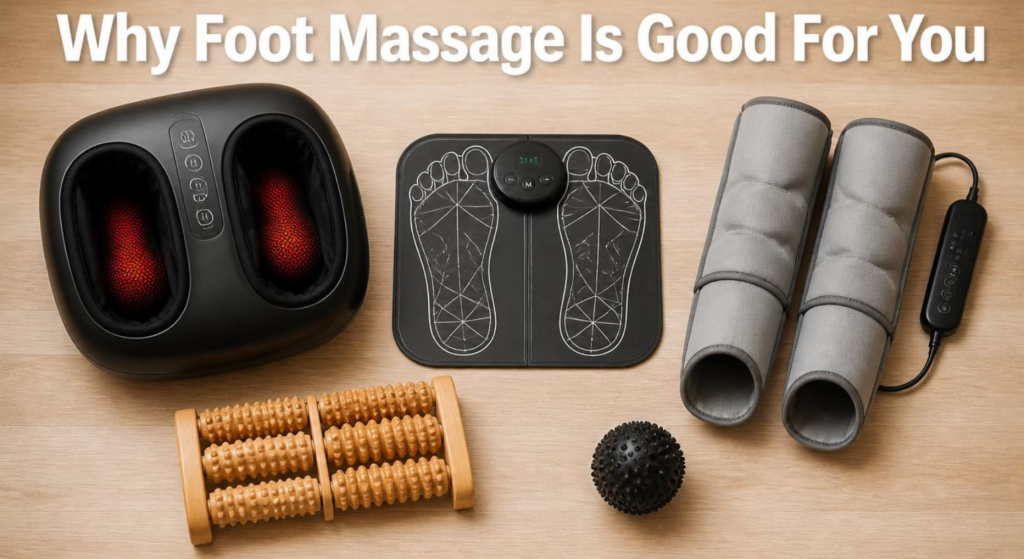
- Massage oil or lotion — coconut oil, almond oil, or a basic unscented lotion reduces friction and lets your hands glide smoothly
- A wooden or plastic foot roller — useful for applying consistent pressure along the arch without hand fatigue
- A tennis or spiky massage ball — good for targeted pressure on tight spots in the arch
- Warm water soak beforehand — softens tissue and makes the massage more comfortable, especially before bed
None of these are required — bare hands and a few minutes are enough to get real benefits — but they can make a daily habit easier to stick with.
How Often Should You Get a Foot Massage?
There’s no single “correct” frequency, but research gives some useful benchmarks:
- Daily (10–20 minutes): Best for ongoing circulation support, ongoing stress management, and consistent sleep improvement
- A few times a week (10 minutes): Studies on people in high-stress jobs used roughly this frequency and still saw measurable drops in blood pressure and anxiety
- Occasional/professional sessions: Still valuable for deeper tension release, but the research suggests consistency matters more than intensity for most of the benefits discussed in this guide
If you’re short on time, a short, frequent habit will generally outperform a single long session once in a while.
Frequently Asked Questions
Why is foot massage good for you?
Foot massage is good for you because it improves circulation, reduces stress hormones, eases muscle tension, and can positively affect brain activity linked to relaxation, pain relief, and sleep.
What does massaging your feet do?
It stimulates nerve endings, increases blood flow, relaxes tight muscles, and triggers the release of endorphins, which is why it leaves you feeling calmer and less tense.
Is it good to massage your feet every day?
Not directly. Foot massage doesn’t burn fat, but it can indirectly support weight management by reducing stress and improving sleep, both of which affect appetite and metabolism.
What are the disadvantages of foot massage?
The main disadvantages of foot massage involve people with blood clotting disorders, diabetes, pregnancy, or active foot infections, who should get medical advice first. Mild, temporary side effects like soreness or tiredness are normal for everyone else.
Does foot massage really affect the brain?
Yes. Brain-imaging studies using fMRI have shown that foot reflexology activates specific brain regions tied to sensation, relaxation, and even memory and sleep patterns.
What’s the difference between foot massage and reflexology?
Foot massage is broad, general relaxation of the whole foot, while reflexology applies precise pressure to specific zones believed to correspond to organs and systems elsewhere in the body. Reflexology is typically more targeted and often performed by a trained practitioner.
How often should you get a foot massage?
Research suggests short, frequent sessions — daily or a few times a week — tend to offer more consistent benefits than occasional long sessions, particularly for circulation, stress, and sleep.
Final Thoughts
So, why is foot massage good for you? Because it’s one of the few simple, low-cost habits with genuine research behind it — improved circulation, lower stress, better sleep, and measurable effects on brain activity. It benefits men and women differently in small ways, works well as a daily habit, and is especially effective as part of a bedtime routine.
It’s not a cure-all, and it’s not a weight-loss method, but used sensibly, foot massage is good for you in ways that are backed by real clinical evidence rather than just tradition. If you fall into one of the higher-risk categories mentioned above, check with a doctor first — otherwise, a few quiet minutes rubbing your feet each evening is a small habit with a surprisingly solid research base.
This article is for general informational purposes only and is not medical advice. If you have a chronic health condition, are pregnant, or are unsure whether foot massage is safe for you, consult a healthcare professional first.
Curious how foot massage compares to using an EMS foot massager, or want to see our full foot massager buying guides? Explore more on FootFixHub, or read about our testing process.
Sources referenced: Harvard Health — Foot massage benefits · PMC — Foot reflexology and fMRI brain activity study · Scientific Reports — Foot reflexology and brain connectivity